


The Festive Stock Market: How Holiday Seasons Affect Investment Trends
Festivals are not only cultural but also a potent economic signal. They move people, inspire spending, and perhaps most interestingly, leave a noticeable imprint on the financial markets.
These holidays have a similar effect on financial markets that range from Mumbai through Manhattan to Shanghai: everyone shows to some extent a more optimistic view of the situation, there is more money available, and returns during the festive periods are slightly positive. The holiday effect, as it has been labelled, is no longer a secret in the world of economics, and it is evenly distributed over developed and emerging countries.
Be it the Diwali Effect in India, the Santa Claus Rally on Wall Street, or the Lunar New Year surge all over East Asia, this is the time of year when a festive season usually brings in waves of confidence that feed market momentum.
But are these rallies then really based on sound fundamentals or just collective sentiment and seasonal vitality, albeit more or less to be kept silent?
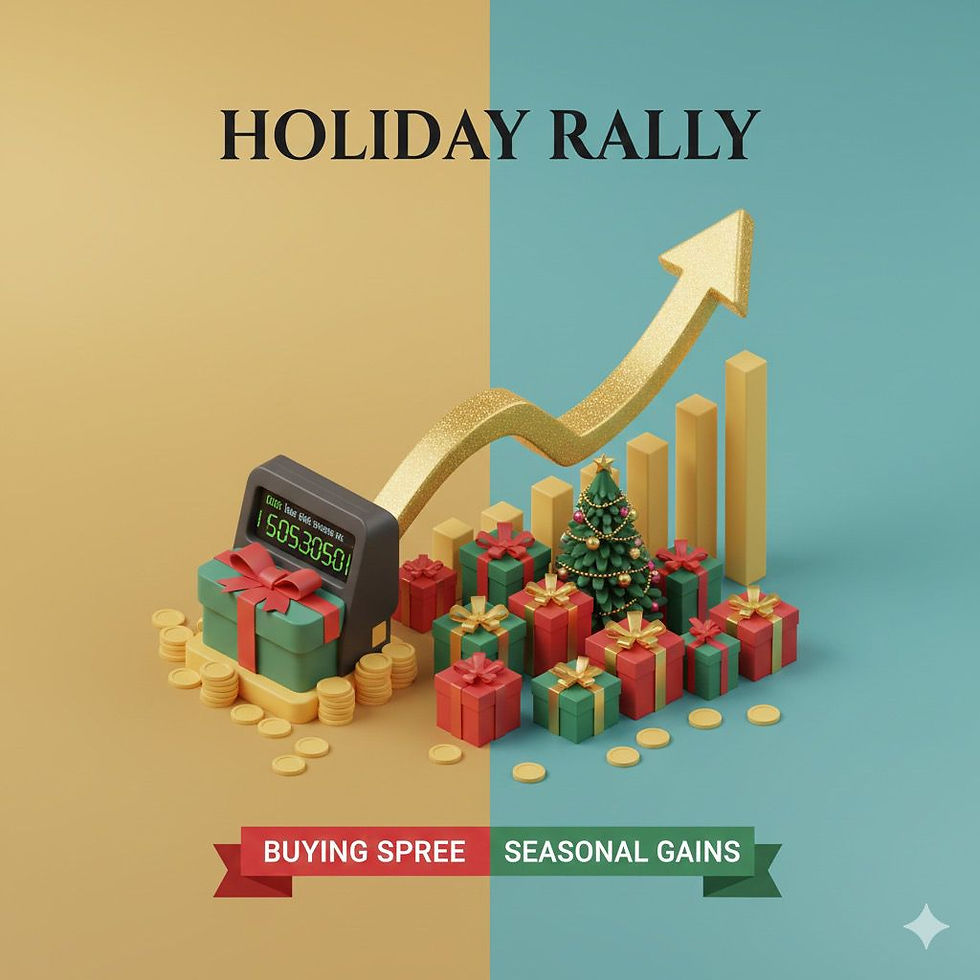
What is the “Holiday Effect”?
The holiday effect is described as a period when investors tend to think positively overall, and, hence, they hurry to buy and sell stocks at a very small price increase in the latter case. Increased consumer spending during festivals is, in fact, a root cause of this phenomenon; it tends to have a positive effect on the share prices of retail companies and other consumer-oriented sectors.
The psychology behind the “Holiday Effect”
The "holiday effect" is not a mere coincidence but, instead, is rooted in investor psychology and trading behaviour. Festive periods combine emotion, optimism, and habit, triggering brief surges of bullish momentum.
It mainly comes down to three things:
Positive Sentiment: Holiday cheer boosts investor confidence and risk-taking, lifting demand and prices.
Low Participation: When there are not a lot of traders active in the market, low liquidity magnifies even the smallest buying waves.
Behavioural Biases: Festive cheer drives investors to follow the crowd, take more risks, and focus on trends over logic, showing how emotion often steers the markets.
In its essence, the holiday effect reveals that logic is very often defeated by emotion, even in the most rational of markets.
Global Faces of the Holiday Effect
But despite cultural and calendar differences, the connection between festive cheer and market optimism seems almost universally strong. Around the world, investors tend to ride a similar emotional wave-a blend of hope, confidence, and renewed energy that often translates into stronger market performance.
United States: Perhaps the best-documented example is the so-called Santa Claus Rally. Historically, the S&P 500 usually goes up during the last week of December and the first two trading days of January. Analysts think this is due to year-end allowances, portfolio rebalancing, and the general optimism related to the new year season, when investors expect new chances and fewer market obstacles.
India: The Diwali Effect is a manifestation of the close cultural connection between money and power in the country. During Muhurat Trading, an evening on Diwali when symbolic trading occurs-markets are often very active and happy. Investors think that this is a good time for making new investments, which leads to a self-fulfilling optimism that often results in short-term increases in returns.
China: Typically, the Chinese stock market sees a surge in the run-up to the Lunar New Year, as traders realign their investments and guess that consumer buying will be much higher when the parties start. This is the case for almost every holiday, where the pre-holiday retail, travel and other economic activities lead to the post-holiday optimism.
The “holiday effect” that is observed in different parts of the world is actually reflecting a similar pattern of human behaviour, where happiness and positivity slowly take over the financial world. People celebrating or investing might be in different parts of the globe, but the investing mood seems to be very much in line with that of the market everywhere.

Conclusion
The festive stock market has undoubtedly been a seasonal curiosity, but more than that, it is a reflection of the close relationship between emotions, culture, and finance in the present day. The holiday effect reinforces the argument that, even in the age of data-driven markets, human behaviour and optimism still have a predominant influence. Elated by festivals, consumers are encouraged to spend, and the resulting increase in demand is like a shot of energy given to global stock markets, thus turning celebration into a force driving the financial market.
Every market sector, from India's traditional Muhurat Trading on Diwali to the Santa Claus Rally on Wall Street, shares the same story of hope, revival, and collective sentiment, just in different modes of speech. Traders noticing these trends in the festive period would not only count on the extra returns from the celebrations but, even more importantly, would get insight into the psychology of moving the market. The numbers might indeed be driving the system, but it is the human spirit-hopeful, emotional, resilient, that actually keeps it alive.


✨✨
👏🏻👏🏻
Very informative.
well written!!
Informative!!